
Allied Vision Plainsboro: Your Comprehensive Eye Health Guide
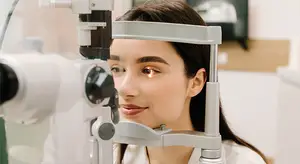
At Allied Vision Plainsboro, we believe an informed patient is a healthy patient. Below are the exact answers to the most common questions our Plainsboro patients ask about their eye health and our advanced diagnostic technology.
1. What is the Optos retinal screening?
The Optos retinal screening (often called an Optomap) is an ultra-widefield digital image of the back of your eye. While traditional imaging only shows about 15% of the retina at once, Optos captures up to 82% (200 degrees) in a single, painless flash that takes less than a second. This provides a permanent digital "map" of your eye, allowing Dr. Chandrani and our team to detect early signs of stroke, diabetes, and sight-threatening conditions like retinal tears or glaucoma long before you notice symptoms.
2. Do I need to be dilated to get the Optos retinal screening done?
In many routine cases, the Optos imaging can be performed without dilation. Because the device can "see" through most pupils, it is a fantastic option for patients who need to drive or return to work immediately after their exam without the light sensitivity and blurred vision associated with dilating drops.
3. Why do I need to get both the dilation and the Optos retinal screening?
While Optos provides a massive, wide-angle view, it is a 2D image. Dilation allows your eye doctor to see the internal structures of the eye in 3D and provides a 240-degree view (slightly more than Optos) to inspect the very far edges of the retina. We often recommend both for new patients or those with high risk factors (like high myopia or diabetes) because they are complementary: Optos provides a benchmark digital record for year-over-year comparison, while dilation allows for a physical, deep-tissue inspection.
4. What is Astigmatism? Should I be concerned?
Astigmatism is not an eye disease; it is simply a common "refractive error," much like nearsightedness. It occurs when your cornea (the clear front surface of the eye) is shaped more like a football or a rugby ball than a round basketball. Because the eye isn't perfectly round, light doesn't focus on a single point on your retina, causing blurred vision at all distances. It is very common, easily treated with specialized "toric" contact lenses or glasses, and is only a concern if left uncorrected, as it can cause chronic headaches and eye strain.
5. What does the "puff of air" test measure, and why is it important?
The "puff of air" test (formally known as Non-Contact Tonometry) measures your Intraocular Pressure (IOP)—the fluid pressure inside your eye. This test is a critical first line of defense against Glaucoma, a "silent" disease that causes permanent vision loss by damaging the optic nerve. High pressure is often the only early warning sign. By measuring how your cornea resists that quick puff of air, we can determine if your eye pressure is in a healthy range (typically 10-21 mmHg).
6. What does a contact lens exam involve?
A contact lens exam is a separate evaluation that happens in addition to your comprehensive eye exam. Because a contact lens sits directly on the eye (whereas glasses sit about 12mm away), your prescription is actually different. The exam involves:
- Corneal Mapping: Measuring the exact curvature and size of your eye to ensure the lens doesn't fit too tight or too loose.
- Tear Film Evaluation: Checking if you have enough natural moisture to wear lenses comfortably.
- Trial Fitting: You will wear a pair of lenses in-office so the doctor can use a microscope to check the "centration" and movement of the lens.
- Follow-up: We often provide "trial" lenses for you to wear at home for a week to ensure they remain comfortable during your actual daily routine before finalizing the prescription.
7. Why do my eyes feel so tired or strained at the end of the workday?
This is often Digital Eye Strain. When we use computers, we blink 50% less often, which dries out the eye surface. Additionally, your internal eye muscles are constantly "clamped" to maintain focus on a screen. We recommend specialized Office Lenses. These are not regular reading glasses; they are optimized for the specific distance of your monitor and desk, allowing your eyes to remain in a relaxed state while you work.
8. How can I stop my child's eye prescription from getting worse every year?
If your child is becoming more nearsighted (myopic) every year, we can now "step on the brakes" using Myopia Management. Using specialized tools like Stellest lenses or MiSight contact lenses, we can signal the eye to stop growing too long. This doesn't just provide clear vision; it reduces their lifetime risk of serious issues like retinal detachment and glaucoma by keeping their prescription lower.